In Ireland, the line between myth and history has always been beautifully blurred. Every mountain seems to have a legend attached, every lough hides a secret, and every ruin whispers an old tale. For visitors, this sense of mystery and storytelling is part of what makes the Emerald Isle so special. It’s a place where landscapes are alive with stories, and where the past still feels very close to the surface.
If you’ve ever wanted to understand the heart of Irish culture, you’ll find it in our folklore. And as you travel across the island — whether on a small-group tour of Ireland or a self-drive Ireland road trip — you’ll discover that the old myths are never far away.
Below, we have shared a selection of our favorite folklore and mythology as an introduction to this fascinating aspect of Irish culture and heritage. Scroll down to find out more! And if you have any questions while reading, please don’t hesitate to contact us.
The Roots of Irish Mythology
Irish mythology is one of the oldest surviving storytelling traditions in Europe. Long before written records, these tales were passed down orally, blending Celtic mythology with Christian influences over time. The result is a world filled with gods, warriors, and shape-shifters, but also a deep connection to Ireland’s landscapes and values.
Traditionally, these stories were grouped into four great “cycles”:
- The Mythological Cycle (about Ireland’s gods and origins)
- The Ulster Cycle (heroic sagas like that of Cú Chulainn)
- The Fenian Cycle (featuring Fionn mac Cumhaill and his warriors)
- The Historical Cycle (which links myths to early Irish kings).
Together, they shaped not just Ireland’s imagination, but its sense of identity.

The Tuatha Dé Danann – Ireland’s Ancient Gods
Before humans ruled the island of Ireland, it was said to belong to the Tuatha Dé Danann, or the “People of the Goddess Danu.” These ancient beings were a supernatural race of warriors, poets, and magicians, masters of both craft and art.
Among them was The Dagda, a jovial god with a cauldron that never emptied; Lugh, the youthful god of light and skill; and Brigid, the goddess of poetry, healing, and spring. Though the Tuatha Dé Danann were eventually driven underground, they were believed to live on as the Aos Sí — Ireland’s fairies. It’s a reminder of how deeply Irish folklore and the land itself are intertwined.
Traveling through the countryside today, you’ll find traces of their stories everywhere, from sacred wells to windswept hills. If you visit during late summer, you might even catch a festival celebrating Lughnasa, a Gaelic tradition celebrating the start of the harvest season, and named after Lugh himself.
Looking for more local festivals to enjoy during your stay? Be sure to read our blog Top Irish Festivals to Pair with Our Small Group Tours of Ireland when you have finished here.

The Children of Lir – A Story of Loss and Transformation
One of Ireland’s most famous fairy tales, the legend of the Children of Lir tells of four royal children, Fionnuala, Aodh, Fiachra, and Conn, who were transformed into swans by their jealous stepmother. They spent 900 years drifting between lakes and seas before being freed — but it was too late to return to their human lives.
It’s a story of sorrow and endurance, but also one of transformation and peace. Many say the haunting beauty of Ireland’s lakes still carries echoes of the story. Lough Derravaragh in County Westmeath is especially associated with the Children of Lir, as it is said that the children spent their first 300 years as swans here before moving to the Straits of Moyle and the Atlantic Ocean.
For travelers exploring Ireland’s Ancient East, this region is a living storybook, where myth, history, and nature all come together. If this part of the Emerald Isle is calling out to you, consider our pre-planned Ancient East Ireland Road Trip. This journey has a carefully crafted itinerary that showcases the best of eastern and southern Ireland.

Cú Chulainn – The Hero of Ulster
When it comes to Irish myths and heroes, none loom larger than Cú Chulainn. Born Sétanta, he is the son of the god Lugh and the mortal Deichtine, making him a demigod. Cú Chulainn earned his more famous name after slaying the guard dog of a smith named Culann, and offering to take its place until a replacement could be raised.
Cú Chulainn’s story is one of courage, loyalty, and tragic destiny. With his famous war frenzy and spear Gáe Bulg in hand, he defended Ulster single-handedly in epic battles and became the ultimate symbol of Irish heroism. Many of the places tied to his legend still exist today, like Navan Fort (Emain Macha) in County Armagh, an ancient ceremonial site that was once the heart of Ulster’s royal power.
For visitors, exploring Northern Ireland means stepping into the same landscapes that inspired these ancient tales. Our tours along the Causeway Coast and beyond are filled with such moments where myth feels real. Check out our Guide to Visiting Northern Ireland to find more about exploring north of the border.
Fionn mac Cumhaill and the Giant’s Causeway
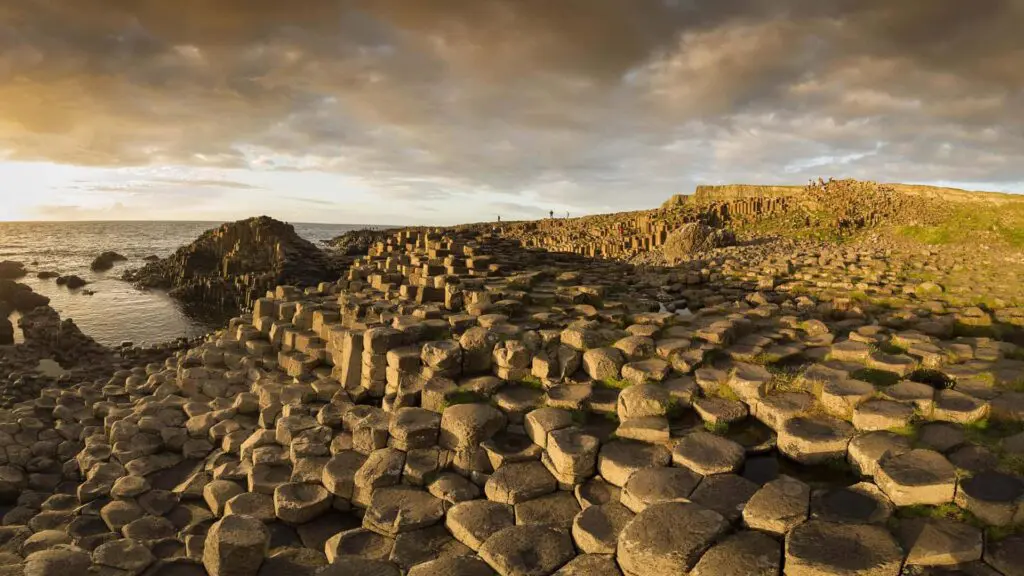
No collection of Irish legends would be complete without Fionn mac Cumhaill, or Finn McCool, as he’s affectionately known. The most famous story tells how Fionn built the Giant’s Causeway as a bridge to Scotland to challenge the giant Benandonner. When he realized his opponent’s size, Fionn’s quick-thinking wife disguised him as a baby. Benandonner took one look at the “child” and fled home in fear, tearing up the bridge behind him.
Today, the Giant’s Causeway is one of Ireland’s most iconic natural wonders and a highlight on Overland’s tours of Northern Ireland. Whether you believe Fionn’s story or prefer the geological explanation, there’s no denying the sense of magic that lingers here.
Don’t miss our blog Everything You Need to Know About the Giant’s Causeway in Northern Ireland to learn even more about this stunning natural wonder.

Fairies, Banshees, and Superstitions in Ireland
Beyond the grand epics and hero tales, Irish folklore is rich with smaller, everyday magic. Many rural communities still respect “fairy forts” — ancient ringforts said to be the dwellings of the Aos Sí, or fairies. Disturbing one is thought to bring bad luck, and you’ll find farmers who still refuse to touch them.
Then there’s the banshee, the wailing spirit said to foretell a family death. Far from the horror trope she’s sometimes portrayed as, the banshee is more a symbol of mourning and deep emotion. These beliefs show how close the supernatural remains to Irish life, even today.
Why Ireland’s Folklore Stories Still Matter
Irish folklore and mythology aren’t just about the past; they’re a living part of our nation’s character. They shape the humor, resilience, and imagination that Ireland is famous for. They remind us that stories can connect people across generations and give meaning to the landscapes we travel through.
So whether you’re tracing Fionn’s footsteps on the Giant’s Causeway, visiting the lakes of Lir, or listening to tales beside a pub fire, you’re joining a storytelling tradition that’s been alive for thousands of years!
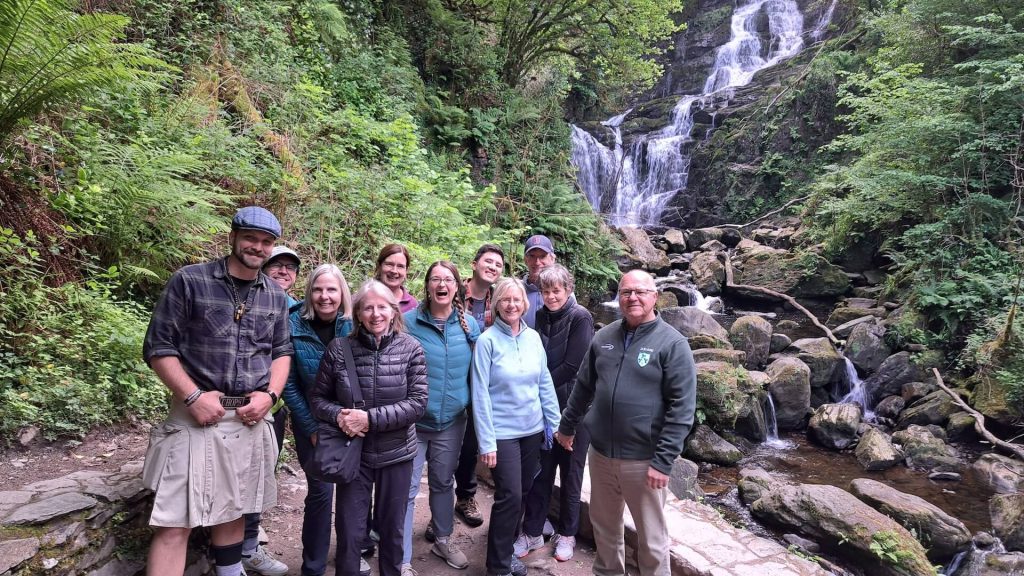
Experience Ireland’s Myths and Legends
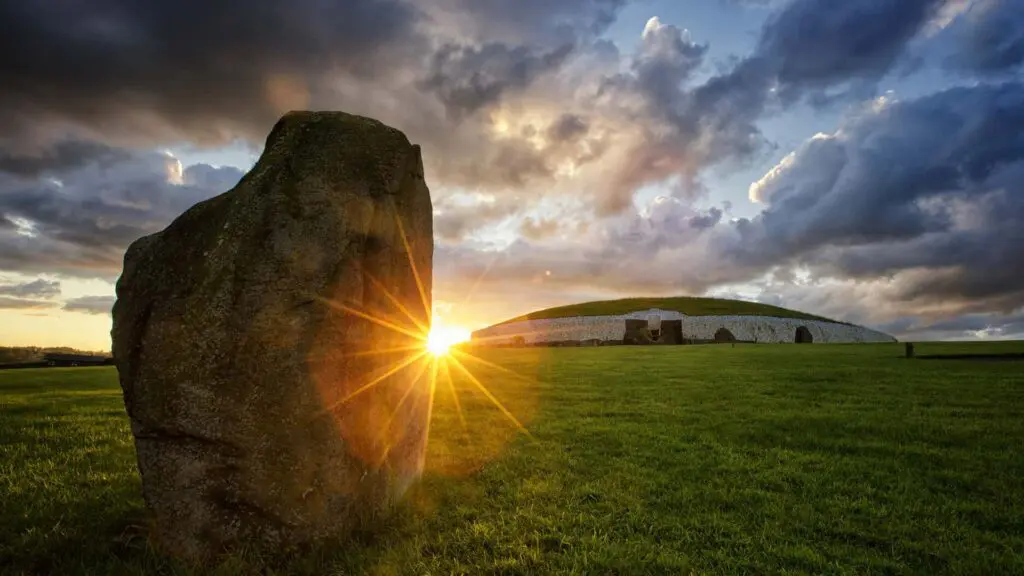
Irish folklore isn’t locked away in books — it’s alive in the places you visit, the songs you hear, and the people you meet. You can stand at Newgrange, older than the pyramids, and feel the same sense of wonder ancient people did. You can wander the Hill of Tara, once the seat of Ireland’s High Kings, or explore castle ruins that seem to hum with old stories.
Ready to experience the myths and legends of Ireland for yourself? Explore Overland Ireland’s range of small-group Ireland tours and see how the stories that shaped a nation can shape your journey too.
And if you want something truly unique, one of our tailor-made tours of Ireland can include folklore sites that speak to your imagination!
Do you have any pre-booking questions? Please don’t hesitate to get in touch for the answers you need.