How to Visit Skellig Michael: A Complete Visitor Guide
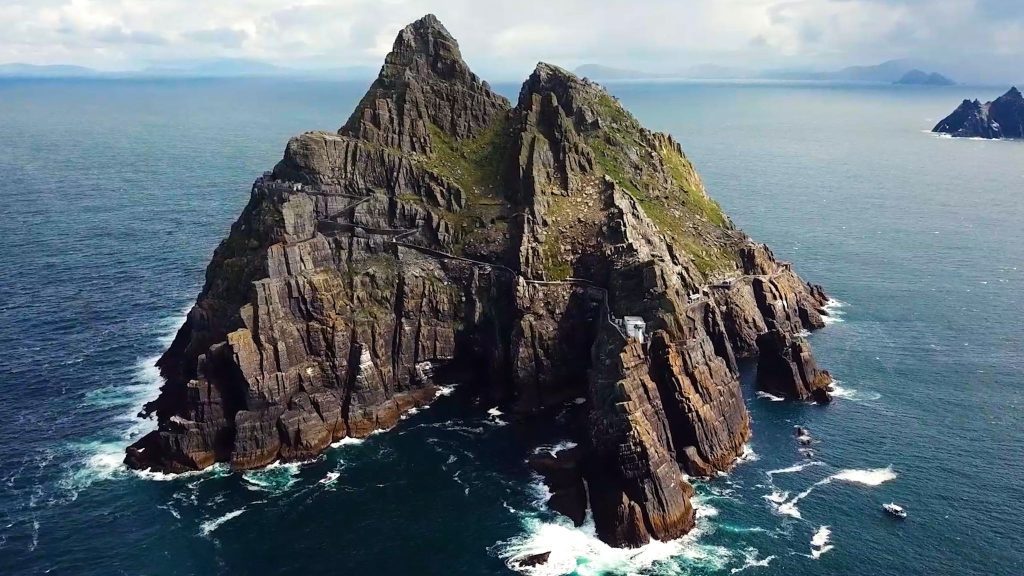
Skellig Michael is a remote, UNESCO-listed monastic island rising 218 metres out of the Atlantic Ocean, just off Ireland’s southwest coast. Early Christian monks built a tiny settlement here over a thousand years ago, and today it remains one of the most atmospheric places in Ireland to set foot.
A visit to Skellig Michael takes planning. The island is only accessible during the visitor season, the crossing depends heavily on Atlantic conditions, and all landing trips operate through permitted boat operators. Once ashore, visitors climb hundreds of ancient stone steps to reach the monastery.
At Overland Ireland, we visit Skellig Michael every season as part of our Ireland to Island 7 Day Tour, so we know the ins and outs of getting here. To help you plan your trip, we’ve created this complete visitor’s guide to Skellig Michael, covering its history, the boat trip, safety advice, what to pack, and all the practical details you may need!
A Brief History of Skellig Michael
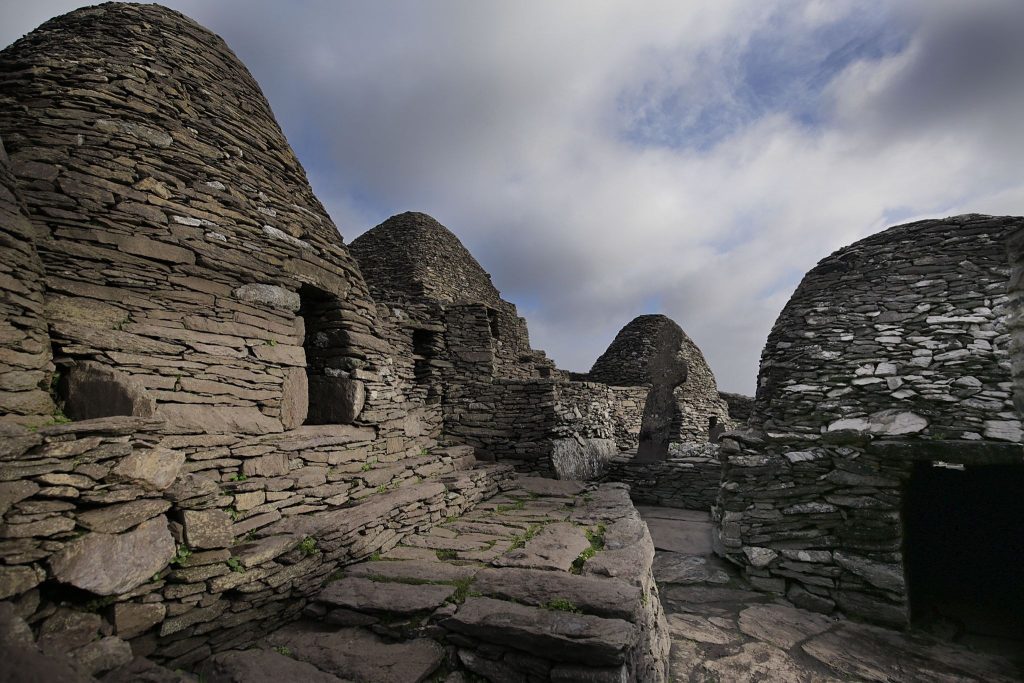
Skellig Michael’s story begins with Ireland’s early medieval monastic settlements. Traditionally associated with St Fionán, the island became home to a small Christian community from around the 6th century. The monks built an extraordinary settlement using the stone around them, consisting of beehive cells, oratories, terraces, pathways, and places for prayer, all set high above the Atlantic.
Life here would have been demanding. The monastery’s isolation was part of its purpose, offering silence, discipline, and distance from the mainland. Yet the island was not entirely untouched by the wider world. Skellig Michael suffered Viking raids during the 9th century, and by the 13th century the monastic community had abandoned the island, moving back towards the mainland, including Ballinskelligs.
In the centuries that followed, Skellig Michael became a place of pilgrimage and later conservation. Its remarkable survival is one reason it was designated a UNESCO World Heritage Site in 1996. For visitors today, you feel the history unfold as you climb the stone steps, pass the terraces, and stand beside the stone buildings that have endured more than a thousand years of Atlantic weather.
Skellig Michael and Star Wars: A Quick Filming History
For many recent visitors, Skellig Michael first appeared on the radar as Ahch-To, Luke Skywalker’s hermitage in the Star Wars sequel trilogy. The island appears at the end of The Force Awakens, released in 2015, when Rey finds Luke on a remote ocean planet. It also appears in The Last Jedi, released in 2017, where the landscape becomes part of Luke’s exile and Rey’s training.
Filming at Skellig Michael took place in short windows, with permits from the Office of Public Works and strict controls, because the island is a protected monastic site and an important wildlife habitat. Visitors may recognise the steps, cliffs, and monastic setting, but much of the expanded Ahch-To village seen in The Last Jedi was recreated elsewhere on the Kerry coast to protect the island.
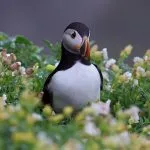
And yes, the porgs have a very Irish origin story: they were partly inspired by puffins, whose presence on Skellig Michael made them impossible to ignore during filming. For the full story, discover why Skellig Michael is the ultimate pilgrimage for Star Wars fans.
When to Visit Skellig Michael
The Skellig Michael visitor season typically runs from mid-May to the end of September, though exact dates can change each year. For 2026, the OPW lists opening from 12 May to September, but these are subject to change. You can check OPW’s Sceilg Mhichíl page for the updated opening times. Outside the visitor season, the site is unmanned and visits are prohibited, both for safety and conservation reasons.
Even during the open season, landing is never guaranteed. Skellig Michael sits in open Atlantic water, and boat trips depend on sea conditions, wind, visibility, and the captain’s decision on the day. June and July are often the most sought-after months to visit Skellig Michael for the clear weather, while visits in May and September can be more weather-dependent. Wildlife lovers should also note that puffins are usually most visible from late May to early August, before they return to sea.
How to Get to Skellig Michael
There is no road, airstrip, bridge, or regular ferry to Skellig Michael. The only way to reach the island is by boat with permitted operators from a small number of harbours on the Kerry coast.
Most visitors travel from the Iveragh Peninsula in County Kerry, with boats operating from places such as Portmagee, Ballinskelligs, Derrynane, Glen Pier, and Valentia. The crossing is roughly 11.5 km and can take around 45 to 90 minutes depending on the departure point and sea conditions.
Skellig Michael Boat Trips: Landings, Eco Cruises, and How to Choose
There are two main types of Skellig Michael boat trips: landing tours and eco cruises. A Skellig Michael landing tour allows visitors to step ashore, climb the ancient stone steps, and visit the monastery. These are the most limited trips because access is controlled and daily visitor numbers are restricted.
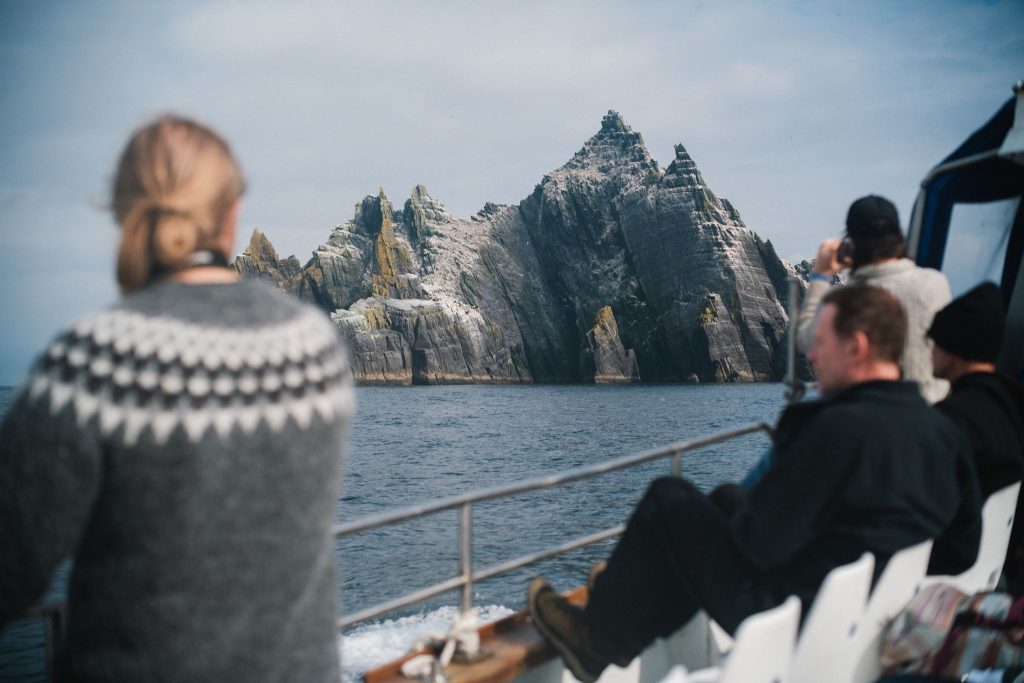
A Skellig eco cruise, sometimes called a Skellig coast tour, circles the islands without landing. This is often a good alternative if landing tours are sold out, if you have mobility concerns, or if weather conditions make landing impossible. Eco cruises can still offer remarkable views of Skellig Michael, Little Skellig, seabird colonies, and the surrounding Atlantic. Little Skellig itself is not open to visitors, but it is hugely important for birdlife, especially gannets. For many travellers, seeing the islands from the water is still an incredible experience.
When choosing a boat trip, make sure to check the operator’s refund policy. Landing always remains at the captain’s discretion. If Skellig Michael is central to your Ireland itinerary, build in a buffer day in Kerry where possible in case your boat trip is cancelled. This is also where travelling with a guide, like on our Ireland to Island tour, can help: good planning gives you options if the Atlantic has other ideas!
How to Book a Skellig Michael Boat Trip
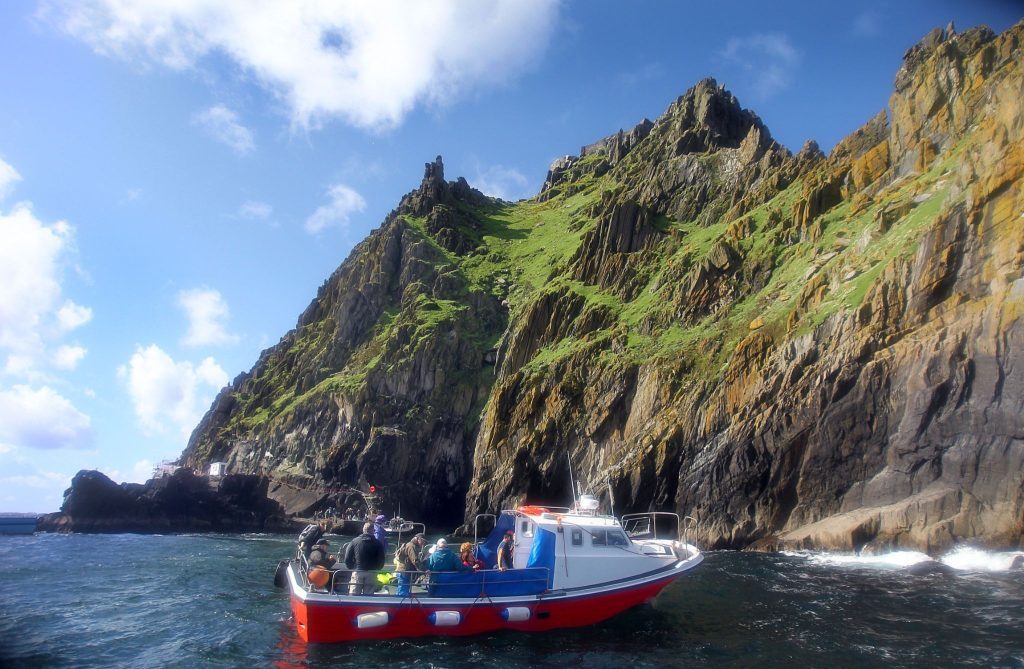
Visitors usually book directly with one of the permitted Skellig Michael boat operators. The OPW has an operator allocation system, providing permits to only 15 operators each season. This system exists to protect the island, manage visitor numbers, and control landing access. With a maximum of 12 passengers per boat and one landing per day, this caps the number of visitors to the island at 180 each day. Because of this, booking in advance is essential.
In peak summer, places can sell out quickly, especially for landing tours. If Skellig Michael is a priority for your trip, start checking availability three to six months ahead where possible, especially if you are travelling in June, July, or August. Deposit and refund policies vary by operator, so read the booking terms carefully before confirming.
Even with a confirmed booking, weather can still cancel the trip on the day. In fact, one in three trips are cancelled each season as a result of the weather. If that happens in peak season, refunds are standard, but rebooking for the same week may not be possible. A second night in Kerry, or a flexible plan B on the Dingle Peninsula, can make the difference between a stressful cancellation and a still-excellent day on the west coast.
What to Expect on the Boat to Skellig Michael
The first thing visitors appreciate when visiting the Skellig Islands is their remoteness. When you set sail from the Iveragh Peninsula in County Kerry, you will be leaving the modern world behind for several hours. Of course, this is one of the magical aspects of visiting the Skellig Islands, and it’s just one reason why they are among the most unique attractions to see in Ireland, but it does present some things worth considering.
Given that Skellig Michael boat tours sail the open Atlantic Ocean, waves and swells can be surprisingly large, and water often splashes inside the vessel. With no roof to protect from the elements either, it’s best to accept from the outset that you will probably get wet! But it’s all part of the adventure.
What’s more, if you are at all sensitive to sea travel, be mindful that you will quite possibly be traversing rough seas. Eat a sensible breakfast and pack travel sickness medicine if you think you will need it for your return voyage.
The boat trip can last anywhere from 45 minutes to 90 minutes, depending on conditions, and you will then spend a few hours exploring the island. This means you must pack water and snacks to keep you satiated and comfortable during this time. But also bear in mind that there are no facilities on the island, so use the bathroom directly before setting off for the day.
Finally, remember that the weather in Ireland is notoriously unpredictable. Bring with you warm and comfortable clothing and ensure you have a waterproof jacket. You don’t want to let a lack of preparedness interfere with your experience of this otherworldly pair of islands. Don’t miss our blog What to Pack on a Trip to Ireland for more local tips and insights!
Explore Skellig Michael Safely
Skellig Michael is a remarkable place to visit, but it is also a challenging site. The climb to the monastery involves 618 steep, uneven stone steps, ascending over 600 feet, or around 180 metres. These steps are over 1,000 years old, exposed, and often without handrails.
When you arrive on the island, a guide will give you a safety talk, and it is imperative that all guidance is adhered to. All visitors must also watch this Skellig Michael safety video. Strong winds are common, and when rain falls, the steps can become slippery. Stay on recognised pathways, keep back from edges, and avoid taking risks for photographs. The island is remote, and emergency access is difficult.
Visitors should also consider their own fitness and mobility before booking a landing tour. The climb is demanding, and children under 12 are not permitted to land. Wear sensible, sturdy footwear with good grip, and avoid sandals, flip-flops, heels, smooth-soled shoes, or anything that could make the climb more risky.
Be Respectful of the Skellig Islands’ Environment
The monastery at Skellig Michael is one of the best-preserved monasteries of the early Middle Ages and is recognised as an important sacred site globally. One of the chief reasons for the survival of the monastic complex, including five of the monks’ beehive cells, is the lack of foot traffic. The remoteness of Skellig Michael has ensured its survival, despite three visits from Viking raiders!
When on the island, be mindful of the environment. Do not drop any litter, stick to the pathways before you, and give due respect to the archaeological sites. If all visitors adhere to such elementary rules, we can hope that Skellig Michael’s treasures will still exist in another 1,000 years.
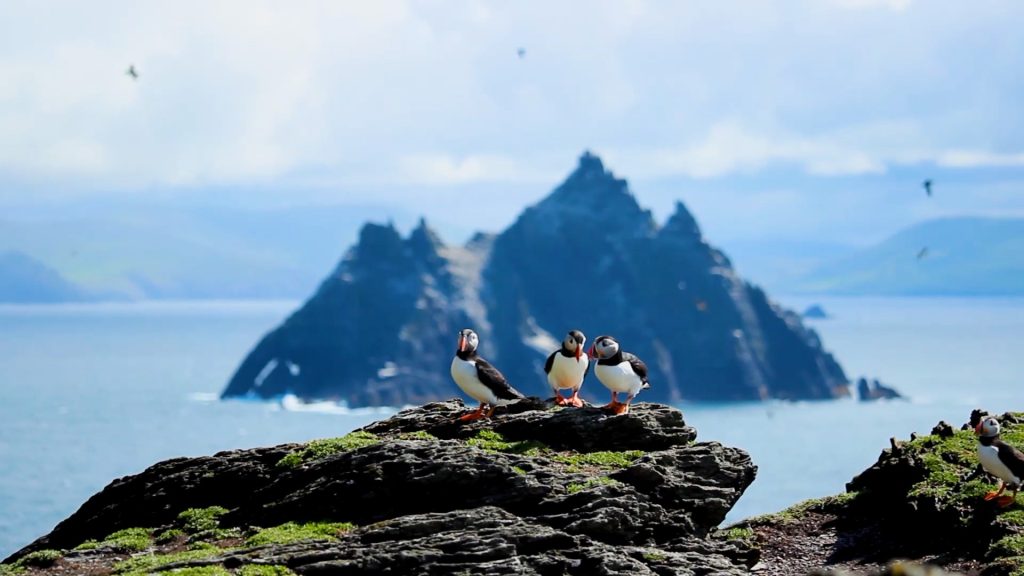
The Skellig Islands are also home to populations of Puffins, Terns, Gannets, and Cormorants, among other birds, so it is important not to interfere with these splendid creatures. Maintaining the conditions we have on the Skellig Islands means we can all continue to savour their natural beauty.
At Overland Ireland, we have partnered with ‘Leave No Trace’, a movement dedicated to protecting and preserving the natural beauty of the Emerald Isle. Help us to conserve the wonders of the place we call home.
Take Time to Appreciate the Skellig Islands
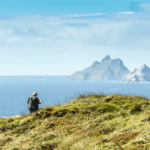
Our final piece of guidance: slow down. When traveling, it is common to become preoccupied with all the things you have to see, the places you want to get to next. Well, Skellig Michael is a long way from the rest of civilization, and wherever you are from, you have arrived somewhere exceptionally remote. Bask in the quiet of the islands, enjoying the sounds of nature. Take in the beauty of the Irish mainland in the distance, of rocky Little Skellig rising from the waves, and contemplate the lives of those ancient monks who called the island home.
Of course, you will want to take lots of Instagrammable pictures to share with your friends, but we recommend keeping technology out of sight as much as possible — it’s not often in life that you will find yourself somewhere quite so serene and magical as the Skellig Islands.
Your Skellig Michael Tour Packing List
Visitors to Skellig Michael should pack carefully. At a minimum, bring:
- A daypack or backpack, preferably with a waterproof cover
- Well broken-in hiking shoes or boots with good grip
- Food and water
- A good waterproof jacket
- Warm layers, even in summer
- Seasickness medication, if needed
- Sun protection on bright days
- Any personal medication you may need during the day
- A fully charged phone or camera, kept safely packed during the climb
Avoid wearing loose clothing that could catch or restrict your movement, and do not wear footwear that is unsuitable for steep, uneven stone steps.
Plan Your Skellig Michael Visit with Overland Ireland
This brings to an end our short guide to the Skellig Islands. We hope we’ve inspired you to begin planning your trip! Remember, our Ireland to Island 7-Day Tour includes a visit to this remarkable place. Or perhaps you would benefit from a private Ireland tour focusing on Skellig Michael? If you have any questions about this blog or our tours, please reach out and contact us anytime.
Frequently Asked Questions About Skellig Michael
Is Skellig Michael worth visiting?
Yes, for most travellers it’s one of Ireland’s most rewarding day trips. Skellig Michael offers a UNESCO-listed monastery, dramatic Atlantic scenery, and an incredible atmosphere. It demands a full day, a boat crossing, and a demanding climb, so it suits visitors who want both adventure and history.
When is Skellig Michael open to visitors?
Skellig Michael is open to landing visitors from mid-May to the end of September each year. Outside of this window, sea conditions and the absence of OPW guide staff make landings unsafe, so the island is closed. Exact dates can shift slightly year to year, so check with the OPW before planning your trip.
How many steps are there at Skellig Michael?
There are around 600 stone steps leading from the landing point to the monastery, rising roughly 180 metres above sea level. Cut by hand over a thousand years ago, they’re steep, uneven, and unprotected by railings in places, so a reasonable level of fitness and sturdy shoes are required.
How far in advance should you book a Skellig Michael tour?
Three to six months in advance is recommended, especially for summer landing tours. Places with the 15 licensed operators sell out quickly for June, July, and August. Booking earlier gives more flexibility on dates, boat times, and departure harbours, and reduces the risk of missing out entirely on a landing spot.
Can you visit Skellig Michael in winter?
No, the island is closed to visitors from October to mid-May. Rough seas, exposed landing points, and the absence of OPW guides and conservation staff make winter access unsafe. For off-season views of the Skelligs, Bray Head on Valentia Island offers dramatic coastal walks looking out toward the islands.
Can you stay overnight on Skellig Michael?
No, overnight stays are not permitted. Visitors spend around 2.5 hours on the island before returning by boat the same day. Only OPW guides and conservation staff live on Skellig Michael during the season, and public access is strictly limited to protect the site’s archaeology and ecology.