Where to See Puffins in Ireland
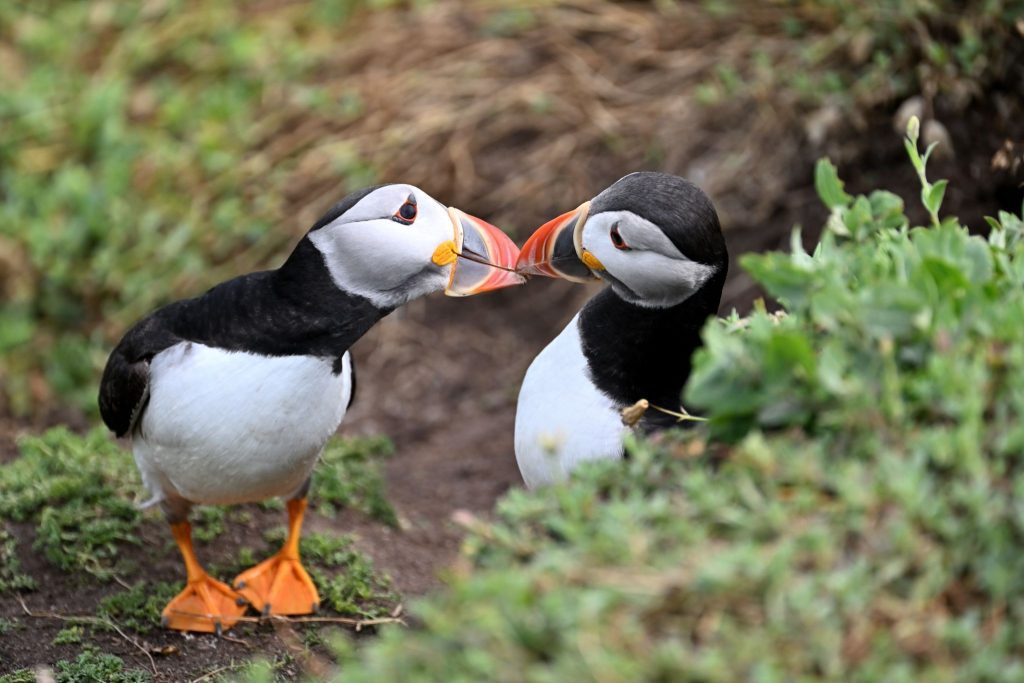
There’s a particular kind of joy that comes from spotting your first puffin. One moment you’re scanning a grassy clifftop, and the next, a small, round bird with a bright orange beak waddles out of a burrow and looks at you as if you’re the unusual one. If you’re hoping to see puffins in Ireland, you’re in luck — with the right planning, a puffin sighting is a near-guarantee!
Puffin sightings are a highlight of Overland’s Ireland to Island Tour, as we traverse the Irish coastline in search of these charismatic creatures. In this guide, you’ll find out about the best colonies to visit, the months that give you the strongest chance of a sighting, and the practical know-how to make your day on the coast unforgettable. Let’s go find Ireland’s puffins!
Why Puffins Capture Hearts in Ireland
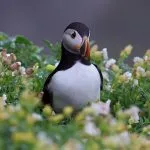
Few seabirds inspire as much affection as the puffin. They’re small, standing at just about 20 cm high, but carry themselves with a kind of seriousness that’s impossible not to love. Watching a puffin land clumsily, sort itself out, and trundle off into its burrow feels less like birdwatching and more like meeting a comical character.
Ireland birdwatching has grown steadily in popularity over the past decade, and puffins often sit right at the top of a birder’s list. They draw families, photographers, solo travellers and seasoned twitchers alike, all hoping to share a clifftop with these charming little seabirds for an hour or two. The good news is that Ireland’s coast gives you several locations to do exactly that!
The Charm of Atlantic Puffins
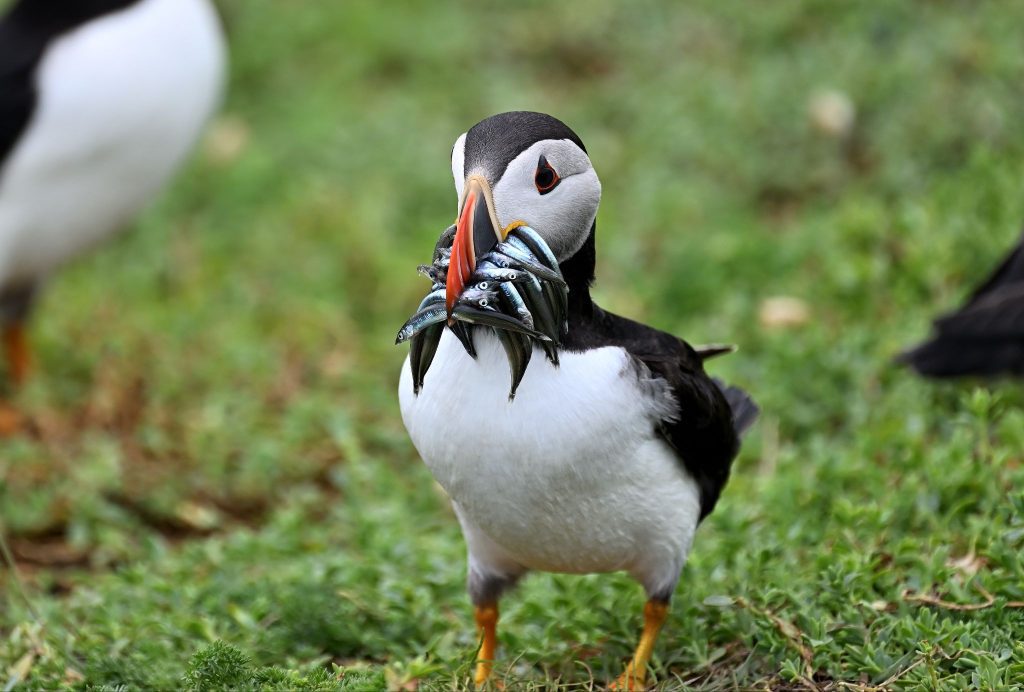
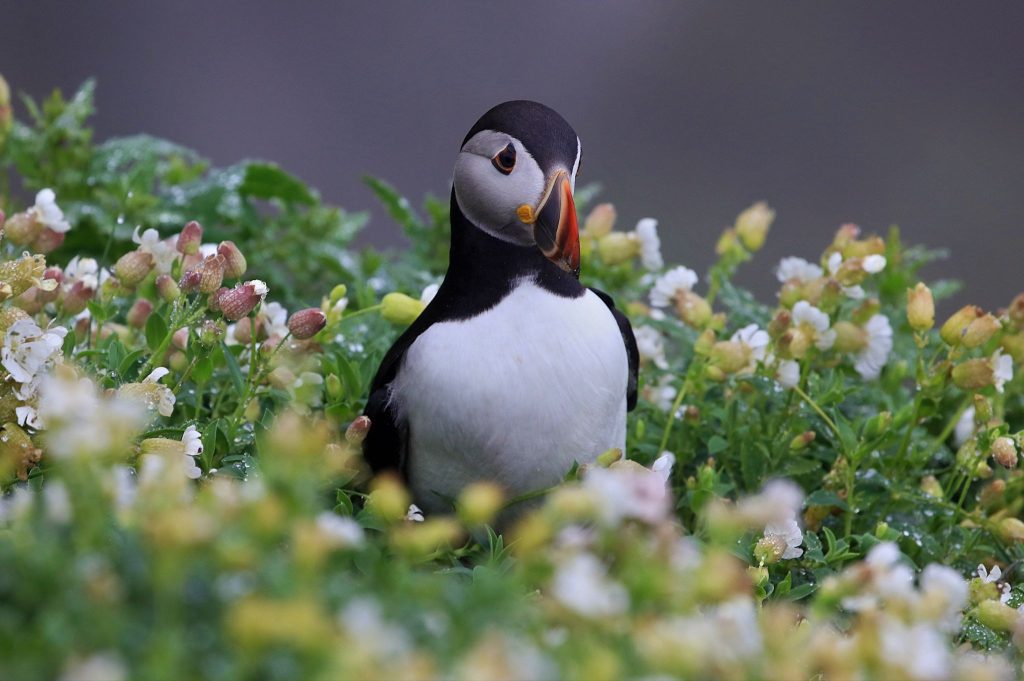
The species you’ll be looking for is the Atlantic puffin (Fratercula arctica), which is the only puffin species in Ireland. During the breeding season (between spring and summer), its beak turns from a dull grey into vivid bands of orange and red. Pair that beak with bright orange feet and a neat black-and-white body, and you have one of the most recognisable birds in the North Atlantic. But it’s the behaviour that wins people over. Atlantic puffins in Ireland nest in burrows, carry beakfuls of fish back to their young, and gather in chattering groups on the clifftops. They’re endearing, entertaining, and surprisingly tough — which is exactly why travellers prioritise seeing them when they come to Ireland.
Ireland’s Unique Birdwatching Destinations
So what makes the Emerald Isle the ideal puffin-watching destination? Ireland’s western edge meets the Atlantic in a long series of cliffs, headlands and offshore islands, the precise kind of habitat seabirds need to breed safely, away from land predators. These rugged spots, scattered with sea pinks and wildflowers in early summer, offer puffins protected burrowing ground and easy access to rich feeding waters. The cool, temperate climate suits them perfectly. From the famous Cliffs of Moher puffins colony to the remote islands off the Kerry coast, Ireland gives these seabirds the perfect place to raise their pufflings — and gives you a front-row seat to their antics.
Top Puffin Colonies in Ireland: Where to Visit for Irish Puffins
There are several reliable puffin colonies along the coast of Ireland, and each one offers a slightly different experience. Some are remote and dramatic, reached only by boat. Others sit within sight of well-trodden visitor trails. Knowing where puffins are found, and what visiting each location involves, helps you choose the trip that suits your time, your budget, and your mobility
Here are the puffin colonies around Ireland worth considering!
The Puffins of Skellig Islands: A Breathtaking Adventure
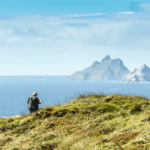
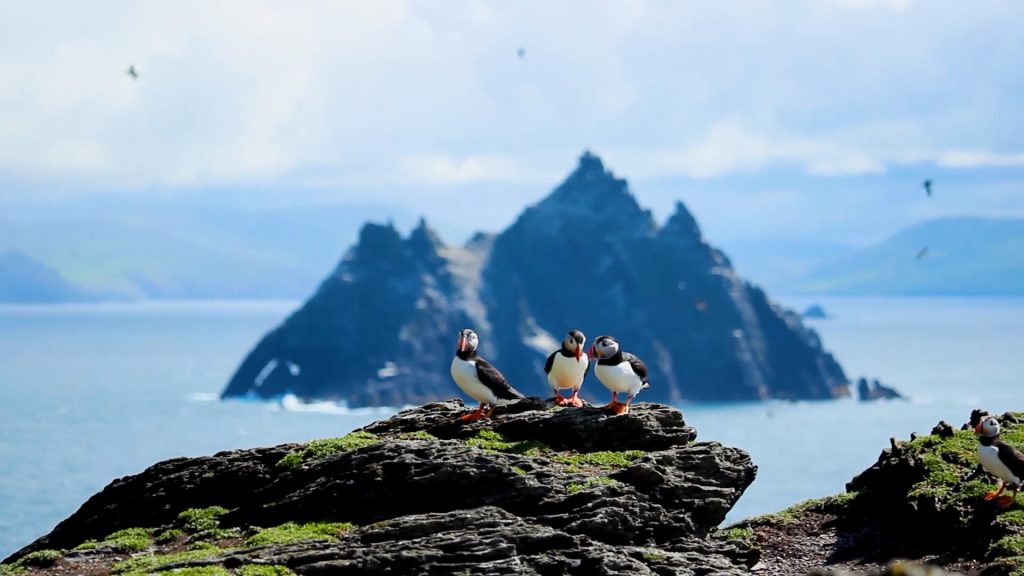
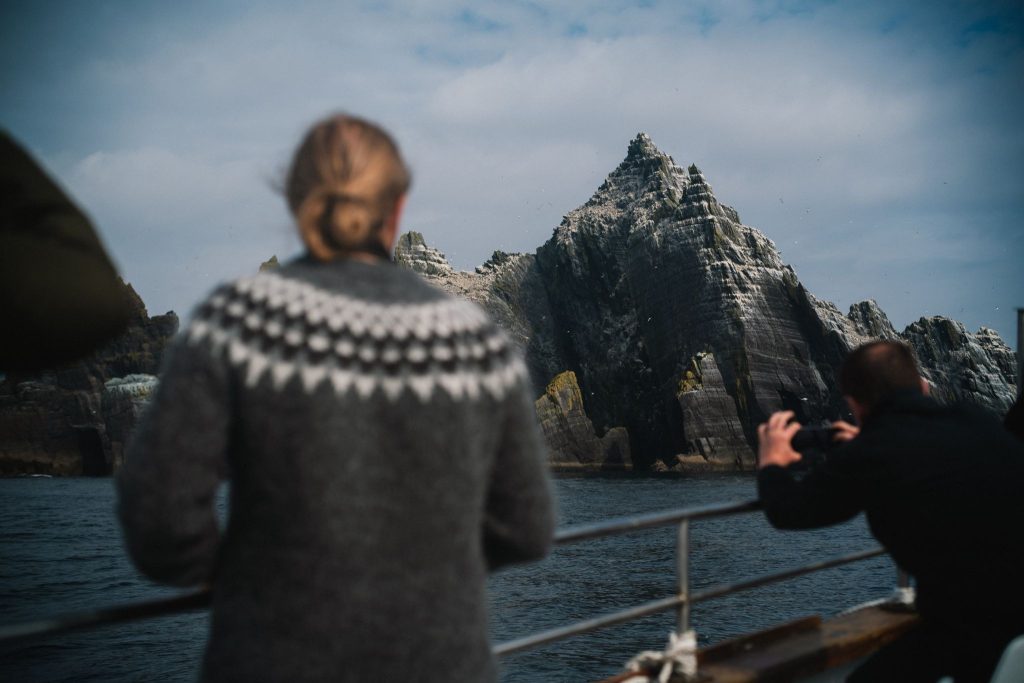
The Skellig Islands, off the coast of County Kerry, are about as epic for wildlife watching as it gets. Skellig Michael, the larger of the two islands, rises out of the Atlantic in a jagged pyramid of rock crowned by a 6th-century monastic settlement. In summer, its slopes come alive with puffins!
Reaching the Skelligs means a boat journey across open water, and arriving feels like stepping into another world. Puffins nest right alongside the ancient stone steps, often within arm’s reach, seemingly unbothered by the visitors climbing past. If you want the full story on this remarkable place, our Skellig Islands guide goes into far more detail on the history and the experience.
Getting to Skellig Islands
Boats to the Skelligs depart from small harbours along the Kerry coast, including Portmagee, Ballinskelligs and Derrynane. The crossing typically takes around 45 minutes each way, depending on conditions, and landing tours are strictly limited to 180 visitors per day to protect the fragile site.
A few things are worth knowing before you go. Bring sturdy footwear, a waterproof layer, and water, as there are no facilities on the island. Crucially, visiting the Skelligs is entirely weather-dependent: if the Atlantic is rough, tours simply don’t run, so it’s wise to allow a flexible day or two in your itinerary in case your trip is rescheduled.
What to Expect at Skellig Islands
Once ashore, you’ll find puffins almost everywhere, peering from burrows, gathering near the path, and whirring out over the water in groups. Their tameness here makes for extraordinary close viewing, and for many people it’s the highlight of their trip to Ireland.
Skellig Michael’s significance goes beyond the birds. It’s a UNESCO World Heritage Site, offering a rare combination of dramatic landscape, ancient ruins and thriving wildlife. For the best photographs, the lower slopes near the landing area offer the best mix of accessible puffins and sweeping ocean backdrops — though you’ll want to keep a respectful distance from the nesting burrows.
Puffin Island, County Kerry: A Coastal Treasure
Just across the water from the Skelligs lies Puffin Island, a protected nature reserve that, as the name suggests, hosts one of the largest puffin populations in the country together with the Skellig Islands. It’s an important breeding site, and the seabirds here nest in great numbers across its grassy slopes.
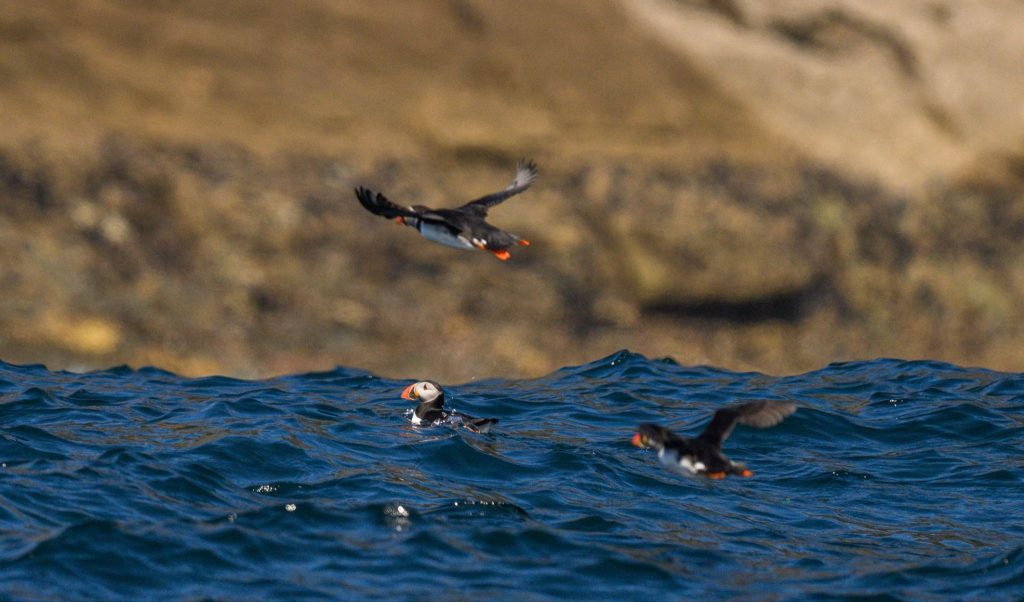
Puffin Island sits closer to the mainland than the remote Skelligs, which makes the puffins here easier to reach for many visitors. The island itself is a strict reserve, so landing is generally not allowed. However, you can cruise close to the cliffs while puffins fly overhead and bob on the water around you.
Puffin Island Visitor Access and Navigation
You’ll reach Puffin Island on the same boat trips that explore the waters around the Skelligs, departing from the Kerry harbours mentioned above. Because landing on the reserve isn’t permitted, most tours pass the island, giving you long, unhurried viewing from the water.
Meeting points and parking are generally at the departure harbours, and operators will let you know what to bring. A typical trip combines Puffin Island with the wider Skellig area, so you can expect a good stretch of viewing time as the boat tracks the coast.
Peak Viewing Seasons
For the best chance of seeing puffins in abundance here, aim for late spring through midsummer. This is when the island is fully occupied, with adults shuttling fish back to their burrows to feed their chicks.
During the core breeding and nesting weeks, activity is at its peak and sightings are at their most reliable. As with all coastal trips, good weather makes for calmer crossings and clearer viewing, so keep half an eye on the forecast when you plan.
Clare Island and Connemara Coast Puffins
If you’d rather trade the tourist crowds for quiet sightings, look to the west. Clare Island, off the coast of County Mayo, offers a more peaceful puffin watching experience. The wider Connemara region adds enormously to the appeal. This is one of the most scenic corners of the country, where mountains tumble down to the ragged Atlantic coast, and wildlife is just waiting to be seen.
Getting Around Clare Island
A regular ferry runs to Clare Island from Roonagh Pier, near Louisburgh in County Mayo, and the short crossing makes a comfortable day trip. The island has a handful of guesthouses and places to eat, so you can also choose to stay overnight and explore at a slower pace.
To make the most of your time, pack walking shoes, layers for changeable weather, water and a packed lunch. Local guides can point you towards the best spots, and the island’s quiet roads and trails make it easy to explore the clifftops where the birdlife gathers.
Combining Wildlife and Scenery
What makes Clare Island special is that the puffins come as part of a much bigger natural experience. You might spot grey seals hauled out on the rocks, dolphins offshore, and a wide cast of seabirds along the coast, all against a backdrop of cliffs and open ocean.
There’s culture and history here too, from an old Cistercian abbey to Grace O’Mallery’s tower, home of the legendary pirate queen. Clare Island is the kind of place where wildlife, landscapes, and heritage all come together for a truly Irish experience.
Best Times to Visit for Puffin Watching in Ireland
Timing is everything with puffins. For most of the year they live far out at sea, only coming ashore to breed, which means there’s a clear window when sightings are possible and a long stretch when they simply aren’t. If you get the timing right, you’ll have wonderful viewing. But if you get it wrong, you’ll find empty clifftops.
Broadly, the puffin season in Ireland runs from around April to early August. Within that window, the experience changes month by month, so here’s how the seasons break down. To line up your visit with both the puffin season and a great time to explore the country, take a look at our guide to the best months to visit Ireland.
| Season | When | What You’ll See |
|---|---|---|
| Spring | April – May | Birds return, reclaim burrows and pair up |
| Summer (peak) | June – July | Busiest colonies, constant feeding, best viewing |
| Autumn | Early August | Chicks fledge; sightings taper off |
Spring Season: Arrival and Nesting
In April, the puffins return. After a long winter spent bobbing on the open Atlantic, the birds come ashore to reclaim their burrows and reunite with their mates, many of whom pair for life.
Spring is a lovely time to watch them settle in. The puffins re-establish their colonies, tidy out their burrows and begin the rituals of the breeding season. By late spring, the clifftops are busy and the flowers are out — a fresh, hopeful time on the coast, as each breeding pair prepares to raise a single egg.
Summer Season: Peak Breeding Activity
If you can only go once, go in summer. June and July are the prime months for puffin sightings in Ireland. The colonies are full, the weather is warm, and the birds are constantly busy.
This is feeding season, so you’ll see adults arriving with beaks stuffed full of small fish to bring back to their hungry pufflings. Watching this endless coming and going — the dashes out to sea, the landings, the squabbles — is the heart of the puffin watching experience, and it’s why summer trips are so rewarding.
Autumn Transition: Late Season Viewing
By August, the picture begins to change. The chicks fledge, slipping out to sea under cover of darkness, and the adults soon follow. Viewing is still possible in early August, but it grows less predictable by the day as the colonies empty out.
If you’re planning a late-season trip, go as early in the month as you can and keep your plans flexible. Once the birds have departed for their winter on the water, they won’t be back on the cliffs until the following spring. If you come within the puffin season, you’ll have a chance to spot them on our Ireland to Island tour!
Planning Your Puffin Watching Adventure in Ireland
A little preparation goes a long way on the Irish coast. The landscapes are rugged and the weather is famously changeable, so the more ready you are before you set off, the more relaxed your day will be.
What to Bring and How to Prepare
Pack for all four seasons, even in July. Boat trips can be cold and spray-soaked even on a bright day, so dress warmer than you think you’ll need. These are the essentials to bring:
- A waterproof, windproof jacket, plus warm layers and a hat
- Sturdy walking shoes or boots for uneven clifftop ground
- Water, snacks and sun protection — there are no facilities on the islands
- Binoculars to watch puffins up close without disturbing the birds
- Motion-sickness remedy if you’re prone to seasickness on boats
Photography Tips for Puffin Watching
Puffins are a photographer’s gift — colourful, characterful and often surprisingly close. A telephoto lens helps enormously, but even a phone can capture lovely shots when the birds are near the path. Aim for a fast shutter speed to freeze them in flight, as they move quickly.
For composition, try to catch them in natural moments: a beak full of fish, a pair greeting at a burrow, or a bird framed against the sea. Soft morning or evening light is most flattering, and patience nearly always pays off. If you wait quietly, the puffins will carry on with their day around you.
Respecting Ireland’s Wildlife and Conservation
Atlantic puffins are classified as vulnerable according to the IUCN Red List of Threatened Species, so responsible behaviour matters. Stick to marked paths, never approach or block a burrow, and keep noise down. Many of Ireland’s puffin sites are protected reserves for good reason. The Atlantic puffin faces real pressures from changing seas and shifting fish stocks, so giving the birds space isn’t just good manners, but contributes to their protection. Watching well means leaving no trace that you were ever there.
Other Wildlife You’ll Encounter in Ireland
Here’s a happy truth about puffin watching: you rarely see only puffins. These birds are part of a rich coastal ecosystem, and a trip to see them usually delivers a whole cast of other wildlife.
Seabirds and Marine Species in Ireland
On the same cliffs hosting the puffin colonies, you’ll likely spot guillemots, razorbills, kittiwakes, fulmars and gannets, forming a busy community of seabirds. Each has its own niche, and together they make the coast hum with life.
Out at sea, you’ll find the waters teeming with marine mammals. Grey seals are common, and often bob up to inspect passing vessels. With luck you may see dolphins, and at the right time of year even whales pass through Irish waters. It all adds up to an exceptional wildlife experience beyond the puffins alone!
Practical Visitor Information for Ireland
Most of Ireland’s best puffin sites lie along the western seaboard, in beautiful but rural areas, so a bit of forward planning pays off.
Best Tour Operators and Guides
Because so many puffin sites are reached by boat, a good operator makes all the difference. Look for licensed, experienced skippers with strong local knowledge, sensible group sizes, and a clear commitment to wildlife-friendly practices.
This is also where travelling with an Ireland tour comes in. A well-planned trip threads the best coastal highlights together, handles rescheduling due to weather, and adds the kind of local insight that turns a good day into a great one. That’s why our Ireland to Island tour is the perfect option if you want to do some puffin watching without the planning!
Accommodation Options Near Puffin Sites in Ireland
For the Kerry colonies, the villages of the Iveragh Peninsula, like Portmagee, Cahersiveen and Waterville, make central bases, with everything from cosy B&Bs to small hotels. For Connemara, the towns of Westport, Louisburgh and Clifden offer plenty of choice, while Clare Island has its own accommodation options.
Staying close to your departure point is a real advantage, especially when boat trips run early or get rescheduled for weather. Just be sure to book ahead for summer, as accommodation gets booked out quickly in the peak season.
Your Irish Puffin Journey Awaits
Seeing Atlantic puffins in their wild, Irish home is a truly unforgettable experience. Whether you want close encounters on the Skelligs or the quiet magic of Clare Island, there’s an adventure here to suit every traveller. Come in summer, dress for the weather, choose your colony, and let us handle the rest. Get in touch with Overland Ireland, and let’s go find some puffins together!
Frequently Asked Questions about Puffins in Ireland
When is the best time to see puffins in Ireland?
The puffin season runs roughly from April to early August, but June and July are the prime months. This is peak breeding and feeding time, when colonies are full and sightings are most reliable.
Where are puffins found in Ireland?
The Skellig Islands and nearby Puffin Island off the Kerry coast are home to the biggest colonies of puffins in Ireland. Clare Island in Mayo, the Cliffs of Moher in Clare, and the Connemara coast are also home to puffins.
Can you see puffins at the Cliffs of Moher?
Yes. The Cliffs of Moher host a puffin colony during the breeding season, best viewed from late spring into summer when the birds are nesting on the cliff faces and ledges.
Do you need a boat to see puffins in Ireland?
Often, yes. Many of the best colonies — including the Skelligs and Puffin Island — are on offshore islands reached by boat, though some sites like the Cliffs of Moher can be viewed from land.
Are puffin trips in Ireland weather-dependent?
Yes. Boat trips to remote sites only run in good weather conditions, so build a flexible day or two into your itinerary in case your trip is rescheduled.